
 When starting any construction project, the groundwork is the most important part.
Two critical processes—grading and trenching—set the base for a stable and long-lasting structure.
Proper excavation work is essential for everything from small backyard sheds to multi-story buildings.
From shaping the land to managing water flow, grading and trenching ensure that your project stands the test of time.
The Basics of Grading and Trenching
Understanding Grading in Construction
Grading involves shaping the land to create a level surface or to direct water away from buildings and other structures.
This process is crucial for managing drainage and preventing flooding, which can lead to serious damage over time.
The grading process may involve cutting into the earth to create a slope or filling in low areas to achieve a more uniform surface.
Often, shoring systems are needed to support the sidewalls and ensure the safety of the workers.
This foundational step is typically one of the first tasks in site preparation to ensure that the ground can support the weight of the structure above.
Proper grading helps to minimize soil
The Importance of Trenching for Infrastructure
Trenching refers to digging narrow, deep ditches to install essential utilities such as water lines, sewer pipes, and electrical conduits.
These trenches provide the necessary pathways for utilities that keep a building’s safety and functionality
The trenching process must be precise to ensure that these utilities are laid at the correct depth and alignment.
Incorrect trenching can lead to complications such as damage to utility lines or improper drainage, which could negatively impact the foundation.
Trenching is a critical part of the process for ensuring that a structure has the necessary infrastructure to operate effectively.
Best Practices in Excavation

Ensuring Soil Stability for Future Projects
One main goal of good excavation is to make sure the soil can support the planned building.
Soil testing is very important in this process.
In looking at soil samples, we can see what they are made of and also find out how much weight they can hold and if they might expand or shrink.
With this information, we can understand how deep to dig and what ways to support the soil we may need.
Good site preparation and soil stabilization are key for the long-term stability and safety of your construction project.
Preventing Water Damage Through Effective Drainage
Another important part of digging is creating good drainage systems.
These systems help keep your building safe from water damage.
Good drainage starts with shaping the land where water will flow away from the building’s foundation during grading.
This often means installing drainage pipes, catch basins, and other systems to manage water.
These tools collect and direct excess water away from the building.
In places with heavy rain or high water levels, stronger drainage options, like French drains or sump pumps, might be needed.
The Critical Differences Between Grading and Trenching
Timing and Application in Construction Phases
Grading and trenching are essential yet distinct phases of the construction process.
Grading is usually the first step, creating a stable base for the entire site.
This initial work is crucial because it sets the stage for everything that follows.
A well-graded site ensures that the ground is level and properly sloped, which is important for drainage and stability.
Once grading is complete, trenching can proceed.
Trenching is necessary for installing utilities such as water, gas, and electricity.
This sequence needs to be followed because utilities need to be laid before pouring concrete or completing the foundation.
Specific Techniques and Equipment Used
The techniques and equipment used for grading and trenching can differ significantly, tailoring to its specific tasks.
For grading, heavy machinery like bulldozers and graders is often used to efficiently move large amounts of earth.
Bulldozers are great for pushing soil and clearing the site, while graders help achieve the desired level and slope.
In contrast, trenching relies on more specialized equipment such as excavators and trenchers.
Excavators are versatile machines that can dig deep and wide trenches, making them suitable for larger projects.
Trenchers, on the other hand, are designed specifically for digging narrow ditches with precision.
The Role of Excavation in Laying a Strong Foundation
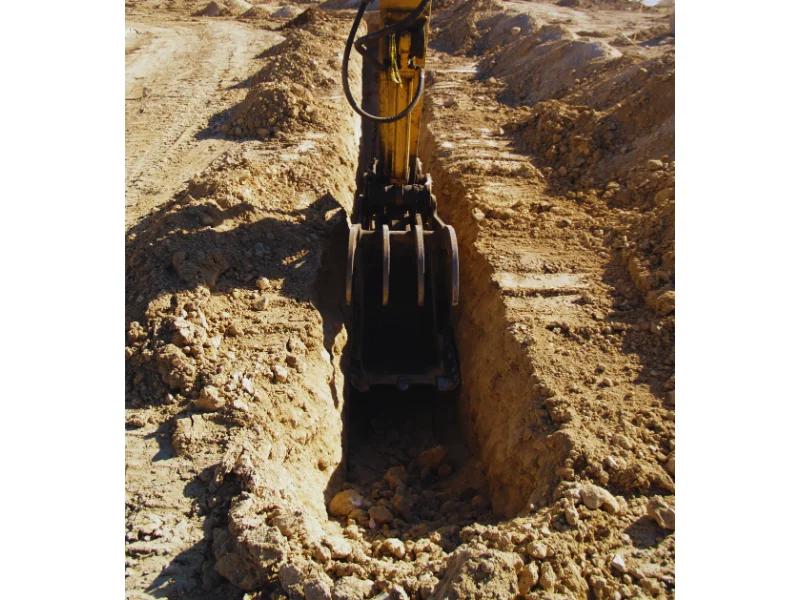
Proper excavation plays a crucial role in how well a building can withstand bad weather and maintain its strength over time.
When done carefully, excavation creates a flat and firm base that evenly supports the weight of the structure.
A solid excavation helps prevent settling and other issues that could affect the integrity of the building.
How Grading Influences Building Stability
Grading is essential for creating a strong foundation and managing water flow around a building.
When the ground slopes away from the structure, it allows rainwater to drain away effectively.
This helps prevent water from pooling around the building, which can lead to serious damage, especially in areas with heavy rainfall or soil that retains moisture, like clay.
Proper grading not only enhances stability but also protects the foundation from water-related issues.
Trenching Techniques for Efficient Utility Installation
Installing utilities safely and efficiently involves effective trenching methods.
Using trenchers allows for the digging of straight and narrow trenches, making the process much easier.
For larger projects, excavators are needed as they can create trenches with the correct depth and width.
Additionally, trench boxes are temporary supports placed inside the trench to ensure worker safety in deep holes.
They help prevent the walls from collapsing and protect workers from soil falling on them.
After utilities are installed, it’s important to fill in the trench and compact the soil well to keep the ground stable and prevent future settling.
Build a Stronger Foundation With Eagle Rock Excavation
Grading, excavation, and trenching form the backbone of any successful construction project.
Together, they lay the groundwork for stability and longevity.
Proper excavation is key to ensuring your foundation remains strong, your utilities function smoothly, and your structure is protected from water damage and soil erosion.
At Eagle Rock Excavation, we specialize in grading and trenching to create a solid foundation for your building.
Whether you’re starting a new project or addressing an existing issue, our team is dedicated to getting the job done right the first time.
Feel confident about your project—reach out to Eagle Rock Excavation today.
Don’t settle for anything less than the best when it comes to your foundation. Trust our experts to deliver a strong and lasting result.
Contact Eagle Rock Excavation today and let us help you build a foundation with confidence.


